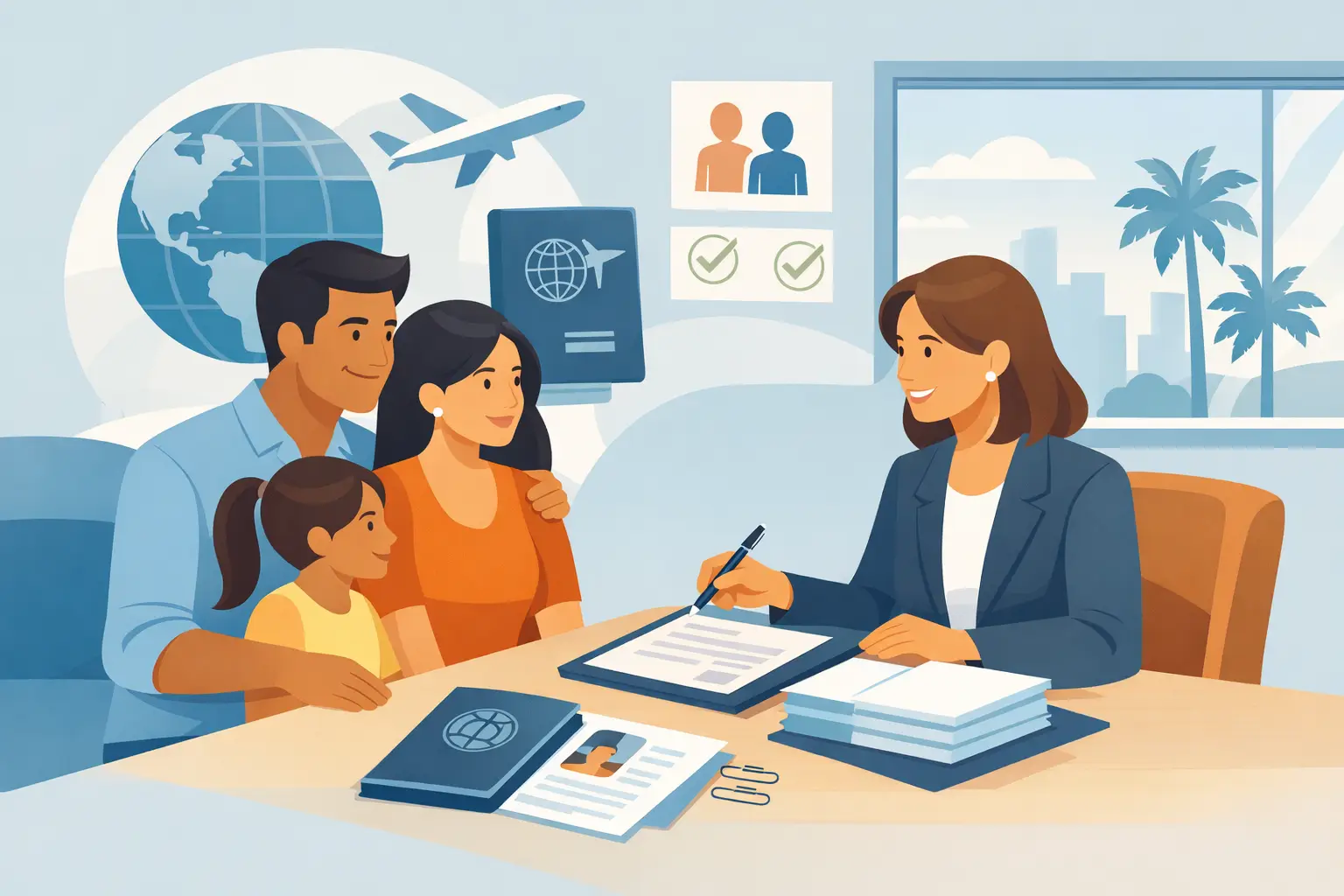
A family immigration petition often begins with a stack of papers that feels far bigger than it should: identity records, relationship evidence, prior immigration documents, financial forms, translations, and government instructions. The right family immigration petition document help can bring order to that stack, so you can move forward with a complete, organized filing package based on your situation and directions.
For many Southern California families, this paperwork is personal. It may involve a spouse living abroad, a parent hoping to reunite with a child, or a household trying to understand the next step after a petition has been approved. The forms matter, but so do the details behind them. A missing signature, inconsistent date, incomplete copy, or document submitted in the wrong format can create avoidable delays and stress.
What a Family Immigration Petition Is Designed to Do
A family immigration petition is generally the first formal request used to establish a qualifying family relationship for immigration purposes. A U.S. citizen or lawful permanent resident may file a petition for certain relatives, depending on the relationship and the petitioner’s immigration status.
The petition itself is not always the entire process. In many cases, it is one part of a longer path that may later involve additional forms, civil documents, financial information, medical requirements, or a consular process. What comes next depends on the family category, where the relative is located, and the instructions that apply to the case.
That is why families should avoid treating every case as identical. A spouse petition, a petition for a parent, and a petition for an unmarried adult child can require different supporting records and follow different timelines. Careful preparation starts with identifying the filing purpose and gathering documents that match it.
The Documents Families Commonly Need
Government filing instructions should always guide the documents included with a petition. Still, most family-based filings call for several categories of paperwork. Keeping these categories separate from the start makes the package easier to review, copy, and organize.
Proof of the Petitioner’s Status
The person filing the petition typically needs documents showing U.S. citizenship or lawful permanent resident status. Depending on the circumstances, this may include a birth certificate, U.S. passport, certificate of citizenship, naturalization certificate, or permanent resident card.
Copies should be clear and complete. If a document has information on both sides, include both sides. Blurry photos, cropped images, and partial photocopies can create unnecessary questions.
Proof of the Family Relationship
The required relationship evidence depends on who is being petitioned. A spouse case may involve a marriage certificate and records showing the marriage is genuine. A parent-child case may require birth certificates and, in some situations, additional evidence related to name changes, custody, adoption, or a parent’s relationship to the child.
For a spouse petition, families may choose to include relevant evidence from their shared life, such as records showing a shared residence, joint finances, children, travel, communication, or family events. The goal is not to overwhelm the package with every photo or message ever exchanged. It is to provide organized, relevant documentation that supports the relationship described in the filing.
Identity and Prior Immigration Records
A beneficiary may need to provide identification documents, passport pages, prior immigration notices, travel documents, or records connected to previous filings. If either person has used another name, documents that explain the change should be kept with the file.
Dates, names, and places should be reviewed carefully across all forms and records. A small difference, such as using a maiden name on one document and a married name on another without an explanation, can make a file harder to follow.
Documents in Spanish or Another Language
Documents not written in English generally need a complete English translation with the appropriate translator certification. Translation is not simply a brief summary of the document. Names, dates, stamps, seals, handwritten notes, and other relevant content should be addressed accurately.
Bilingual English-Spanish support can be especially useful when family members are gathering civil records from Mexico, Central America, or other countries. It helps everyone understand which document is being requested and why a clear copy or translation may be needed.
Family Immigration Petition Document Help: What Preparation Includes
Document preparation support is practical support. It can include helping a client work through form questions at the client’s direction, entering information consistently, preparing a document checklist, organizing supporting evidence, making filing-ready copies, and assembling the packet in a clear order.
It can also mean slowing down before submission. Government forms change, filing fees can change, and a form edition date matters. Using an older form, forgetting a required page, or sending a payment in an incorrect amount may result in a rejected package before the petition is reviewed.
A careful preparation appointment creates time to check basic filing details: whether every required field has been addressed, whether signatures are present where needed, whether copies are readable, and whether the package includes the documents identified for that filing. It does not remove the emotional weight of the process, but it can make the paperwork feel manageable.
How to Prepare Before Your Appointment
Bring what you have, even if you are not sure every item belongs in the filing. A document preparation professional can help organize the records and identify what may need to be copied, translated, or placed in the correct section of the package at your direction.
It is helpful to gather original civil documents, readable copies of identification, current and prior immigration notices, marriage or divorce records when relevant, and any documents related to name changes. Keep paperwork in date order when possible. If you have notices from several previous filings, do not throw them away simply because they look old. They may help create a clear record of the case history.
Write down questions before the appointment as well. Families often remember key details later, such as a previous address, a prior marriage, a trip outside the United States, or a variation in the spelling of a name. Bringing those details forward early can help prevent contradictions across the filing.
Common Problems That Slow Down Paperwork
The most common issues are often preventable. Incomplete forms, unsigned pages, missing translations, incorrect fees, outdated editions, and weak document copies can all interfere with a smooth filing process. So can submitting evidence without labels or explanations.
Organization is more than appearance. A package with documents grouped by category and arranged in a logical sequence is easier for the family to understand and easier to review. Use simple labels where appropriate, avoid sending original documents unless instructions specifically call for them, and keep a full copy of everything submitted for your records.
There is also a balance to strike with evidence. Too little documentation may leave questions, while a large, unorganized collection of unrelated papers can make the important records difficult to find. The best approach depends on the petition type and the documents available.
Personal Support for a High-Stakes Filing
Families should not have to face immigration paperwork alone or feel embarrassed because the forms are difficult to understand. At Hemet Document Prep Center, clients can receive professional document preparation assistance, bilingual English-Spanish communication, and virtual consultation options when an in-person visit is not practical.
For families in Hemet, Vista, Riverside County, San Diego County, and nearby communities, a prepared and organized packet can make the next filing step feel less intimidating. Bring your documents, your questions, and the details that matter to your family. A patient review and a clear plan can turn a confusing pile of paperwork into an organized task you can take one page at a time.
Hemet Document Prep Center is not a law firm. We are not attorneys and cannot provide legal advice or legal representation. We provide legal document preparation services at the client’s direction